
Drain cleaning in Watsonville, CA
Drain Cleaning in Watsonville, CA for Backed-Up Sinks, Tubs and Main Lines
A sink that gurgles, a tub that fills around your ankles, or a floor drain that smells. Each one points to a blockage somewhere between the fixture and the sewer, and where it sits decides the fix.
Is it one drain, or the whole house?
The first thing to settle is how far the blockage reaches, because it decides who you call and what the visit involves. You can check it in two minutes without tools.
Toilets are a good test fixture. A plunger clears most single-toilet clogs, but a toilet that bubbles when the shower drains is not a toilet problem. Run water at the other sinks and flush once. If only the one drain is slow, the clog is in that fixture or the short branch behind it. If several fixtures gurgle, a toilet bubbles when the washer drains, or water rises in the tub or a floor drain, the blockage is further down, in the main drain or the sewer lateral.
What this check cannot tell you: what the blockage is made of or how far along the line it sits. It only tells you whether you are dealing with a branch or the main.
Call now, or wait for the next opening?
A drain problem becomes urgent when waste water has nowhere to go but your floor. Stop using every fixture in the house and call right away in three cases. Sewage is coming up through a tub, shower or floor drain. A toilet overflows when another fixture drains. Or the water level in the lowest drain keeps rising.
A slow bathroom sink, a kitchen drain that clears with a plunger, or a tub that drains in a few minutes can wait until you can book a regular visit. Stop pouring grease down it in the meantime and keep hair out of the strainer.
While you wait for the plumber, keep water use to a minimum, move rugs and stored boxes away from the floor drain, and take a photo of anything that has already backed up. A plain description of what overflowed, and from which fixture, helps the plumber arrive with the right equipment.
What a plumber clears at the fixture, and what needs a cable
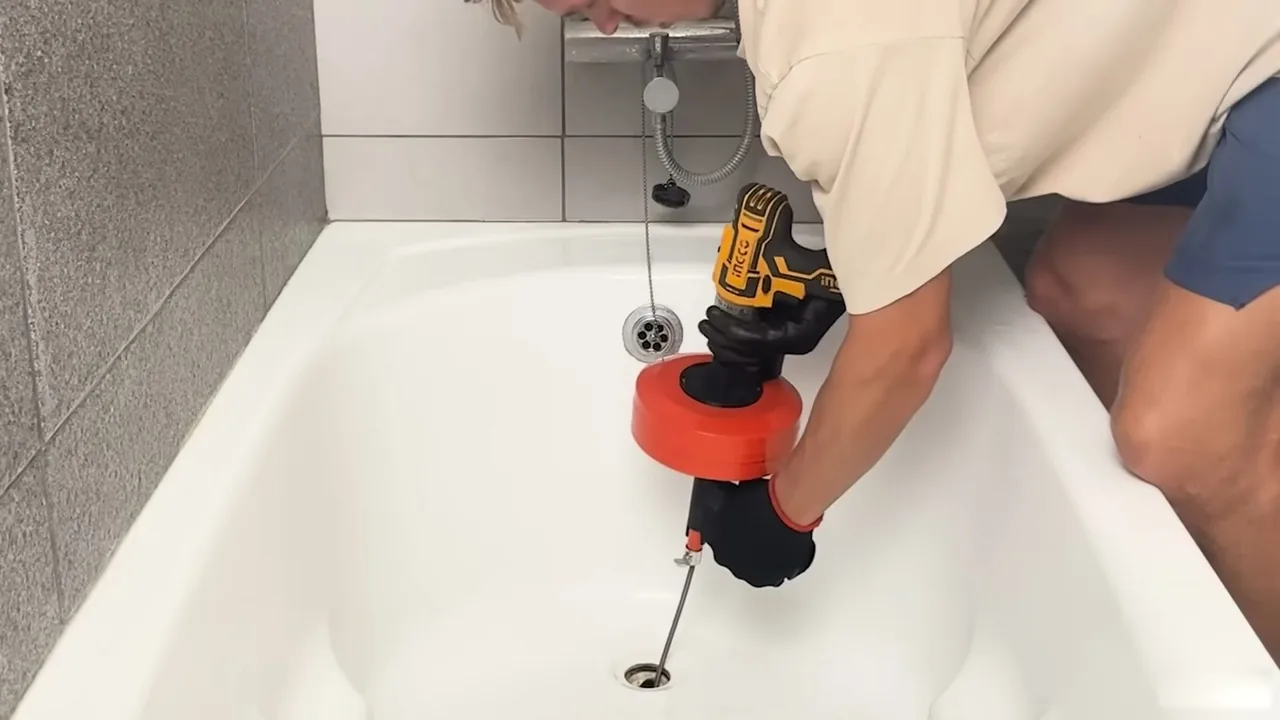
Kitchen sinks usually clog with grease and food residue. Bathroom sinks and tubs clog with hair and soap. Both are normally cleared with a hand tool or a motorized cable run through the trap and the branch line behind it.
A cable also clears a basement floor drain or a laundry standpipe, but a line that keeps refilling after a cable pass is telling you the problem is deeper or the pipe itself is damaged.
Chemical drain openers are worth skipping when a plumber is already coming. The liquid can sit in the pipe and splash back on the person doing the work. Tell the plumber if you used one.
- Ask where the cable entered, at the fixture, a cleanout or the roof vent.
- Ask what came out and how far the cable ran before it cleared.
- Ask whether the drain ran freely when the visit ended, and test it before the plumber leaves.
Not sure whether it is a branch clog or a main line problem? Tell us which fixtures are slow and what you hear, and we will say what the visit should cover.
Call (833) 840-2034When the backup is in the lateral, the City main or your own plumbing
A main-line stoppage in Watsonville has a specific chain of ownership. The private sewer lateral, the pipe from your house to the City main, belongs to the property owner. A stoppage in that pipe is yours to fix, and the City will not take on the cost.
The City handles its own main in the street. If a manhole is overflowing or sewage is reaching the street, call the City at (831) 768-3133, or (831) 471-1151 after hours. Addresses in Freedom are served by the Freedom County Sanitation District, with spills reported to (831) 477-3907. The page on Freedom plumbing questions explains that boundary.
When a lateral stoppage keeps returning, clearing it again is a short-term answer. A camera run shows whether roots, a sag or a crack is behind it, and repairing the sewer line itself covers what happens after that.
Yard drains, French drains and storm drains
Drains outside the house clog with leaves, silt and roots, and the first sign is water pooling where it used to run away. Pour a bucket of water into the grate or cleanout and watch. If it backs up at once, the line is blocked. If it drains slowly, it is partly blocked.
A drain on your own lot is yours to clear. If the blockage is out in the street, ask City Public Works at (831) 768-3100 which office handles it before you pay for work on public pipe.
Say on the call whether you want an existing drain cleared or a new one installed. Clearing is a cable or water job. A new drainage system is an excavation project with its own scope, and it should be quoted separately.
Commercial kitchens and grease lines
Restaurants and food businesses fight a different problem: grease cools in the drain line and builds into a plug that no sink-side clearing will remove. Slow floor sinks and a smell that returns a few days after each clearing are the usual signs.
For a commercial kitchen, ask for a schedule based on what the line actually shows rather than a calendar guess, and ask whether the kitchen exhaust drain is included. Grease-heavy lines are also where hydro jetting earns its place, since a cable can bore a hole through grease that a jet would strip clean.
Why a camera look beats clearing the same drain again
If the same drain clogs twice in a few months, stop paying for clearing alone. A camera inspection shows whether the cause is buildup, a root, a low spot where water stands or a broken joint.
Ask to see the footage, or for a plain description of where the problem sits and how deep. Ask what the next step would be and whether it needs a permit. A plumber who cannot say where the trouble is has not finished diagnosing it.
How often should drains be cleaned?
There is no honest calendar interval that fits every house. A kitchen line that takes a lot of grease needs attention sooner than a guest bathroom. Watch for slow draining, gurgling and smells, and clear the line when they start rather than on a schedule.
If the water loss is not a clog at all, read about hidden leak detection before you book anything.
Drain still slow after you tried the usual fixes?
Call and describe which drains are affected. We will tell you what the visit should involve.