
Leak detection in Watsonville, CA
Water Leak Detection in Watsonville, CA: Finding the Leak Before You Open the Wall
A bill that keeps climbing, a meter that will not sit still or a stain that keeps coming back. The goal is to prove the leak exists, find it exactly and open as little as possible.
Is water really escaping? The meter test
A rising bill, a damp patch or a hiss behind a wall all raise the same question: is water leaving the system, or is it only being used? The water meter answers it.
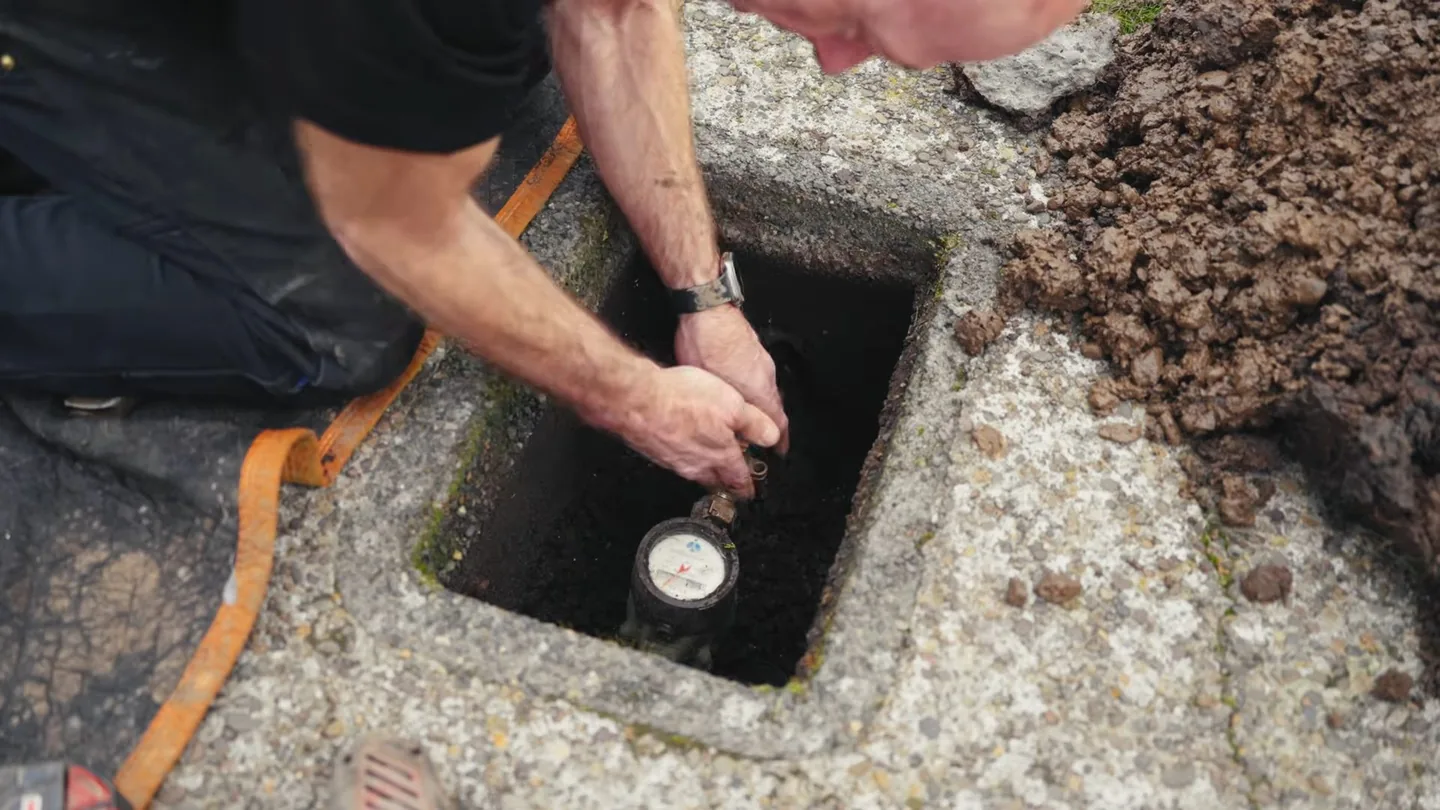
Turn off every fixture and appliance, including the ice maker and any irrigation timer. Look at the meter. If the dial or the small triangle moves, water is going somewhere. Write the reading, wait fifteen minutes with everything still off and look again.
The meter test tells you that a leak exists. It does not tell you where, and it does not tell you whether the water is leaving on your side of the shutoff or before it. For meter and service line questions, the City Water Division is at (831) 768-3133.
Not a leak, probably: a meter that moves only while someone runs water. A moving meter with all fixtures off needs a locate, not a guess.
Early signs that are easy to miss
Hidden leaks announce themselves long before they cause visible damage. The signs are small: a water bill that creeps up with no change in habits, the sound of running water at night, a musty smell in a closet or a cabinet, paint that bubbles or a baseboard that swells.
Look for these in the places pipes concentrate: around the water heater, under sinks and behind toilets, along an exterior wall near a hose bib. A stain that appears and dries and returns is often a slow leak that only shows when the pipe is under pressure.
Do not wait for the damage to be obvious. The longer water stays in a wall, the more it costs to dry and repair, and the more likely it is to cause mold.
Meter still moving with everything off? Call and tell us what you have checked. We will say what a locate involves.
Call (833) 840-2034How a leak gets located without tearing things open
Locating a leak is a process of narrowing. The plumber confirms the leak on the meter, isolates which line it is on by shutting off sections, and then uses equipment to pinpoint the spot.
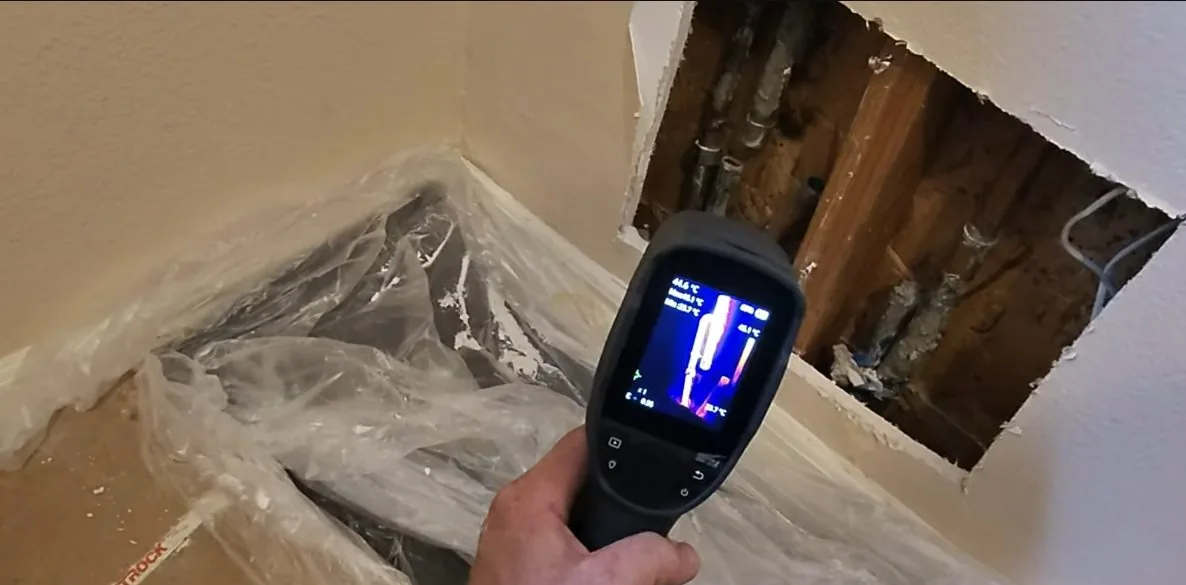
Acoustic equipment listens for the sound of water escaping from a pressurized pipe. Thermal imaging reads temperature differences on a surface, which can show a hot-water line leaking under a floor. Electronic tracing follows the pipe path so the surface can be marked. Each method works better in some conditions than others, and a good plumber uses more than one to confirm.
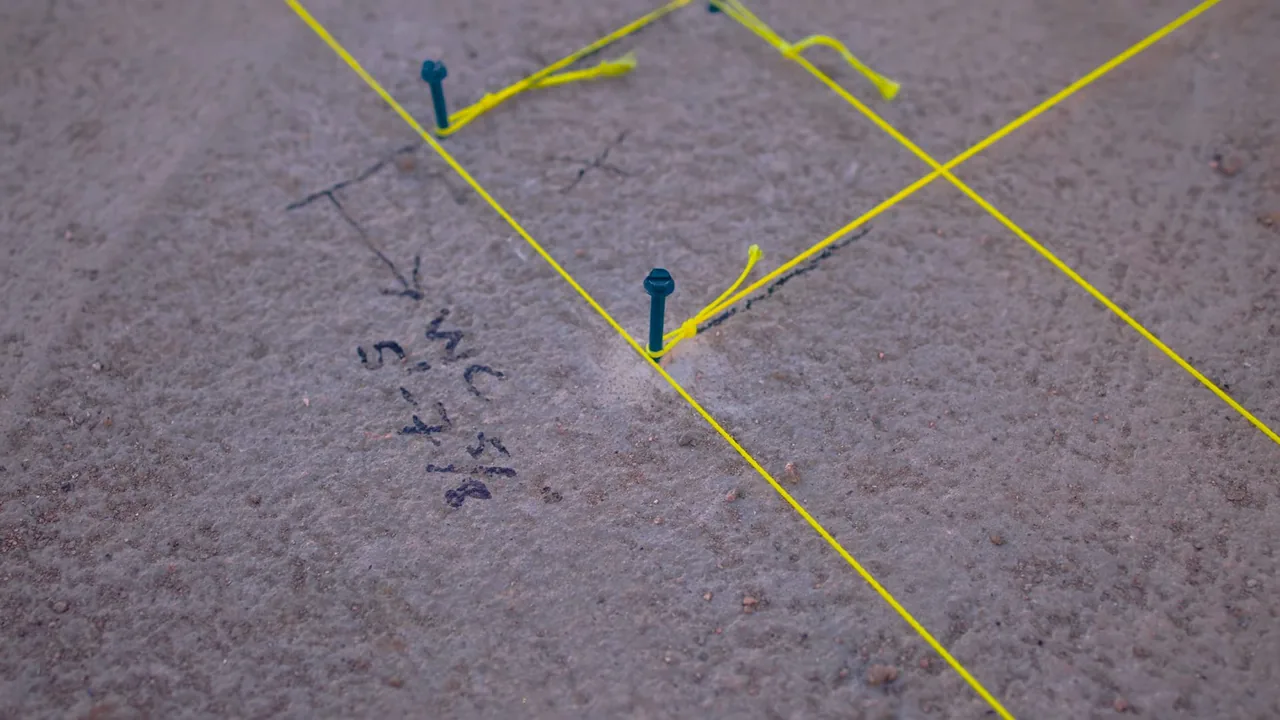
What matters to you is the result: a spot marked on the floor or wall, with a reason for the call. Ask for photos of the marked location and what the equipment showed.
Leaks in ceilings, walls and behind the wall
A ceiling stain says water is arriving from above, but not from where. It can be a supply line, a drain, the roof, a gutter or condensation from a cooling line. The right repair depends on which.
For a wall, the visible stain is usually a downhill point on the water's path. Moisture readings around the stain show how far it has traveled, and they save you from cutting a larger hole than you need.
Ask the plumber to rule plumbing in or out. If the supply and drain lines test sound, the source is something else, and the next call is a roofer or a gutter contractor rather than a second plumber.
Leaks that belong to someone else
Leak detection covers the plumbing, and a good plumber will say plainly when a leak is not part of it. A roof leak belongs to a roofer and a gutter leak to a gutter contractor. A pool or spa leak needs a pool technician with the right equipment, and a sprinkler line needs an irrigation specialist.
A gas smell is not a plumbing locate at all. If you smell gas, leave the house and call 911 or your gas utility from outside.
What the plumber can do is test the household water supply and drain lines and tell you whether they are the source. That ruling-out step is valuable, because it keeps you from paying for plumbing repairs on a problem that sits elsewhere.
Pinholes, buried lines and the yard
A pinhole leak is a tiny failure in a pipe wall, and it sprays a fine stream that can soak a wall quickly. Finding one is a locate, and fixing one is a repair of that section. If a second or third pinhole follows, ask whether the pipe is failing throughout. That conversation belongs to whole-house repiping.
A leak in the yard is harder to see. Look for unusually green or soggy ground, a drop in pressure or a meter that runs with the house off. If the loss is on the line from the meter to the house, ask the City Water Division who is responsible for which stretch before you hire anyone to dig.
In every case, ask the plumber to confirm the leak on the meter before and after the repair, so you know it is fixed.
Basement, crawlspace and under-house dampness
Dampness below the living space has more possible sources than any other leak. Supply lines, drain lines, a leaking water heater, groundwater seeping through a wall and even condensation on cold pipes can all leave the same wet patch.
Check what you can see first. Is the water clear, rusty or sewage-smelling? Is it wet only after rain, or all the time? Does it run along a pipe or appear on a wall? Wet only after rain points away from plumbing. Wet at all times, with the meter moving, points toward it.
Ask the plumber to separate those causes in the report. A crawlspace that stays damp from drainage is not a pipe repair, and the right fix may be a grading or drainage contractor.
Shops, restaurants and multi-unit buildings
In a commercial building the first problem is often finding which line the leak is on. There are more lines, more meters in some cases and more people who can say they did not see anything.
Ask for a written plan before the locate begins: which areas will be shut off, how long and how the business will keep running. For a multi-unit property, ask whether the leak affects one unit or the shared lines, because that decides who pays for the repair.
Keep the report. It is the evidence you will need if you must show an owner, a tenant or an insurer that the leak was real and where it was.
What a leak detection report should give you
- Where the leak was found, marked on the surface and photographed.
- How it was confirmed, such as a meter test or a pressure test.
- What the equipment showed and why that points to the spot.
- What repair is needed, and which other lines were ruled out.
- Who should handle the damage once the leak is stopped.
If the leak has already wet a floor or wall, the next step is drying. The page on drying out water damage explains what that involves, and a leak you can see bursting is covered under burst pipe repair.
Water bill climbing or a stain that will not go away?
Call and tell us what you see. We will tell you what the first step should be.