
Tankless water heater services in Watsonville, CA
Tankless Water Heater in Watsonville: Gas Line, Vent and Demand Decide
Endless hot water sounds simple, but a tankless heater only performs if the gas line, vent and demand fit the house. Check those first and the switch is straightforward.
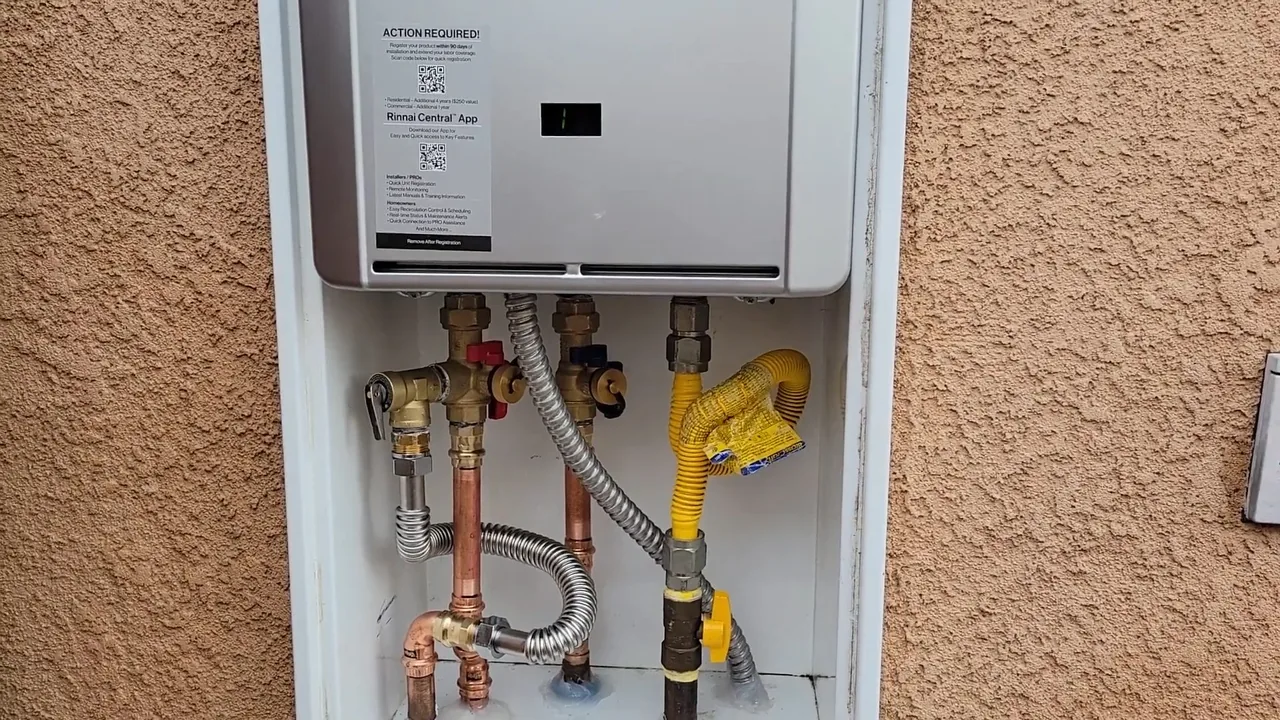
Three checks before you decide on tankless
A tankless heater heats water as it flows instead of storing it, so it can run an endless supply. It can also disappoint if the house was not ready for it. Three checks tell you most of what you need.
First, the gas line. A gas tankless unit burns more fuel at once than a tank heater, so the gas line often has to be larger. Second, the vent. A tankless unit needs its own approved exhaust path and a way to drain acidic condensate if it is a condensing model. Third, demand. If two showers and the dishwasher run together, one unit may not keep up.
Ask the plumber to check those three things at the house before quoting. A quote that ignores them is a quote for a different house.
Gas, electric or an undersink unit
Gas tankless units suit whole-house demand when the gas line allows it. Electric tankless units draw a great deal of power and may need a larger panel or new circuits, so the electrical side can cost more than the unit.
A point-of-use or undersink heater is a small unit that serves one sink or bath. It makes sense for a faucet that is far from the main heater, where you wait for hot water, or for a new space where running another line would be difficult.
Tell the plumber which of these jobs you are solving. A whole-house replacement and a small unit for one faucet need different equipment, different permits and different budgets.
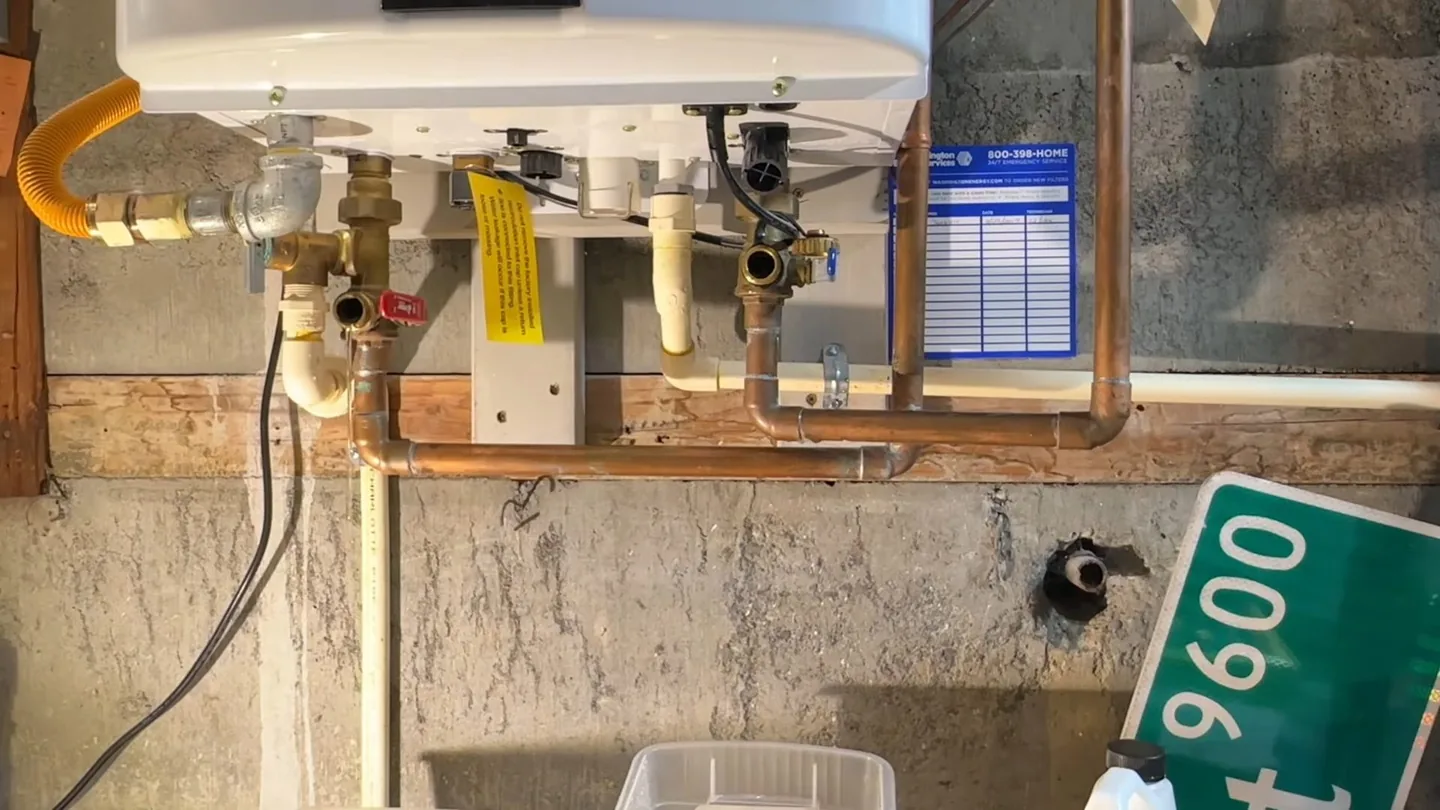
Weighing tankless against another tank? Call with your fuel type and how many people use hot water at once. We will tell you what to check.
Call (833) 840-2034What a switch from a tank involves
Replacing a tank with a tankless unit is a bigger job than swapping one tank for another. The plumber may need to upsize the gas line, run a new vent, add a condensate drain or a power circuit, and mount the unit on a wall that can carry it.
Isolation valves let a plumber flush the unit later, so ask that they are installed. Ask where the unit will sit, how its exhaust will terminate and what clearance it needs from windows and doors.
- Gas line size, or the electrical load for an electric model.
- A vent path that suits the model and the building.
- A drain for condensate on condensing units.
- Isolation valves for later flushing.
- A wall location that suits the unit and its clearances.
Compare this against a straight tank replacement on water heater replacement. The right choice depends on the house, not on what is newest.
Sizing: flow rate and how hot you want the water
A tankless unit is rated by how many gallons per minute it can heat and by how much it can raise the temperature of the incoming water. Colder incoming water means less flow at the same output, so a unit that looks generous on paper can fall short on a cold morning.
The way to size it is by the fixtures that run at the same time, not by the number of bathrooms. Add up a shower, a kitchen tap and a washing machine if they overlap in your house, and ask the plumber to show you how the model they recommend handles that load.
If the answer is a larger unit or two units, hear the reason and the added gas and vent requirements before you agree.
Scale and descaling: the maintenance that keeps it running
Hard water leaves mineral scale inside a tankless heater's heat exchanger, which makes it work harder and eventually fail. A yearly descaling flush is the usual answer where water leaves scale.
This page does not state a hardness number for Watsonville water, because the figure should come from the City's annual water quality report. Ask the City Water Division at (831) 768-3133 for the current report, and ask the plumber to read it with you.
If the report shows hard water, ask about a softener or a scale filter at the same time. Water softener installation covers that question.
When a tankless heater is not the better choice
Tankless is not automatically better. A house with marginal gas supply, no good vent route and few occupants may be better served by a tank. A property that is going to be sold soon may not recover the cost of the switch.
It also changes how hot water behaves. Some units take a moment to start, and very small flows, such as a trickle at a sink, can fall below the minimum the unit needs to fire.
A plumber who recommends tankless only after looking at your gas line, vent and habits is being straight with you. One who recommends it from the doorway is not.
Repairing a tankless unit you already have
Tankless heaters announce problems with error codes, lukewarm water, a unit that cycles on and off or a vent that sounds wrong. The usual causes are scale, a dirty or failed flame sensor, a clogged filter on the water inlet or a vent blockage.
Before you call, note the error code on the display and what the water does. Do not open the unit. Gas appliances have sealed combustion parts, and a gas smell means leave the house and call 911 or your gas utility.
Ask whether the plumber services your brand and has parts for it. For tank-style heaters, the page on water heater repair covers repairs.
Warranty, lifespan and the paperwork to keep
Tankless units are usually sold on a long service life, but that depends on water quality and maintenance. Ask what the manufacturer's warranty covers on the heat exchanger and on other parts, and how long each lasts.
Ask whether the installer's own labor warranty is written, whether descaling is required to keep the manufacturer's coverage and who keeps the records. Keep the model and serial number, the receipt and each service record in one folder.
That folder is also what a future buyer will want to see. A unit with a documented descaling history looks very different from one with none.
Permits and who to ask
Whether a tankless installation needs a City permit is not spelled out on the Watsonville web pages. Gas line changes, new vents and electrical work are the pieces most likely to involve one. Ask Building & Safety at (831) 768-3050 before the work starts, and have the plumber state who pulls the permit.
Check the contractor's license on the Contractors State License Board site. California requires a license once a job passes the dollar limit that took effect on January 1, 2025, and a tankless installation can pass it.
Thinking about tankless or fixing one that is struggling?
Call and tell us what you have. We will tell you what to check first.